
You're Spending Too Much Time Finding Vulnerabilities. What If You Just Stopped Writing Them?
Discover how leading CISOs are helping developers think like attackers, reduce preventable security workload, and scale application security without hiring more security specialists.
 100% money-back if the Kickoff doesn't deliver. No forms, no friction
Every vulnerability was written by a human.
So why is all your security downstream of that moment?
Think about how most security budgets are actually spent.
- Scanners that analyse code after it's written.
- Pentests that find vulnerabilities after they've shipped.
- WAFs that intercept attacks after the code is already live.
All of it operates after the damage is done.
And all of it creates a dynamic where the security team is permanently chasing the engineering team.
Poisoning the relationship with developers.
Slowing deployments.
And doing it all over again next sprint...
And the tools that were supposed to help?
One took six weeks to onboard. Another fires 170 alerts a day.
Your team spends their mornings closing false positives instead of doing real security work.
And with AI accelerating the rate of code production, your Appsec team cannot keep up.
Not only does AI produce more code, but it produces more logical vulnerabilities.
The type that SAST doesn't detect, and thus requires manual review.
Your AppSec team is stretched thin. Reactive by necessity, never proactive by design.
So, you might be following one of two horrible strategies right now:
- You either become the bottleneck and slow down engineering.
- Or you relax your security review and let logical flaws slip through into production.
And through all of it, the moment that actually creates the vulnerability — a developer writing a flawed line of code — receives almost no attention at all.
Your developers are a liability. Devsecurely turns them into your first line of defense.
Fixing a vulnerability before it ships costs 40× less than fixing it in production.
Source: NIST - Cost of Software Security Defects




Hands-On Exploitation Platform

Personalized
Program
Your developers choose the programming language and the framework they use daily.

Vulnerable
Playground
A vulnerable application with the chosen framework is deployed just for the developer.

Real-World
Risks
They learn about real world vulnerabilities. Vulnerabilities we saw regularly during penetration tests.

Hands-On
Hacking
They exploit these vulnerabilities like a real hacker would, so that they understand the risks.

Security
Solutions
They learn how to fix these vulnerabilities, and implement the fix in the source code.

Continuous
Security
Their fix is deployed on the server, and their application becomes a little more secure each time.
2 Live Sessions for Your Entire Team
Before your developers touch the platform, They go through two live sessions designed to create the mindset shift that makes everything else land.
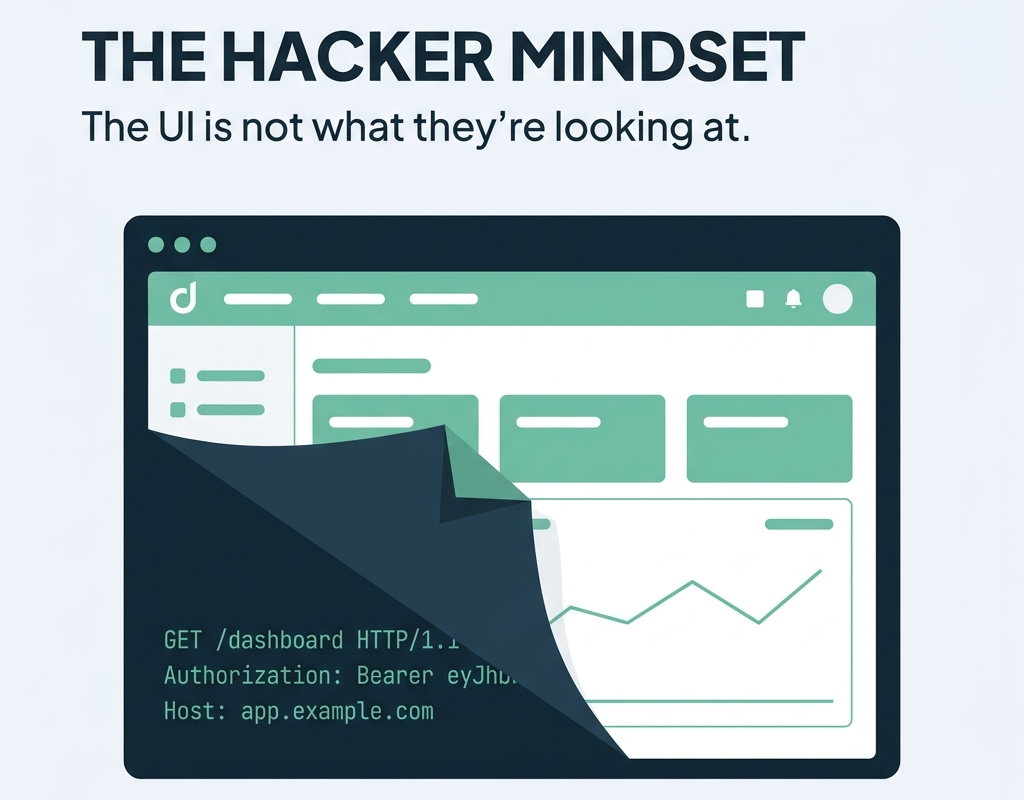
The Hacker Mindset
Your developers will never write code the same way after this session. We show them exactly how attackers see their applications. Not through the UI, but through raw HTTP requests. And demonstrate live how erroneous assumptions get exploited in real time.
- Live HTTP request interception and exploitation demo
- The four attack surfaces every application exposes
- Technical vs logical vulnerabilities, and why both matter
- How to protect against both technical & logical vulnerabilities
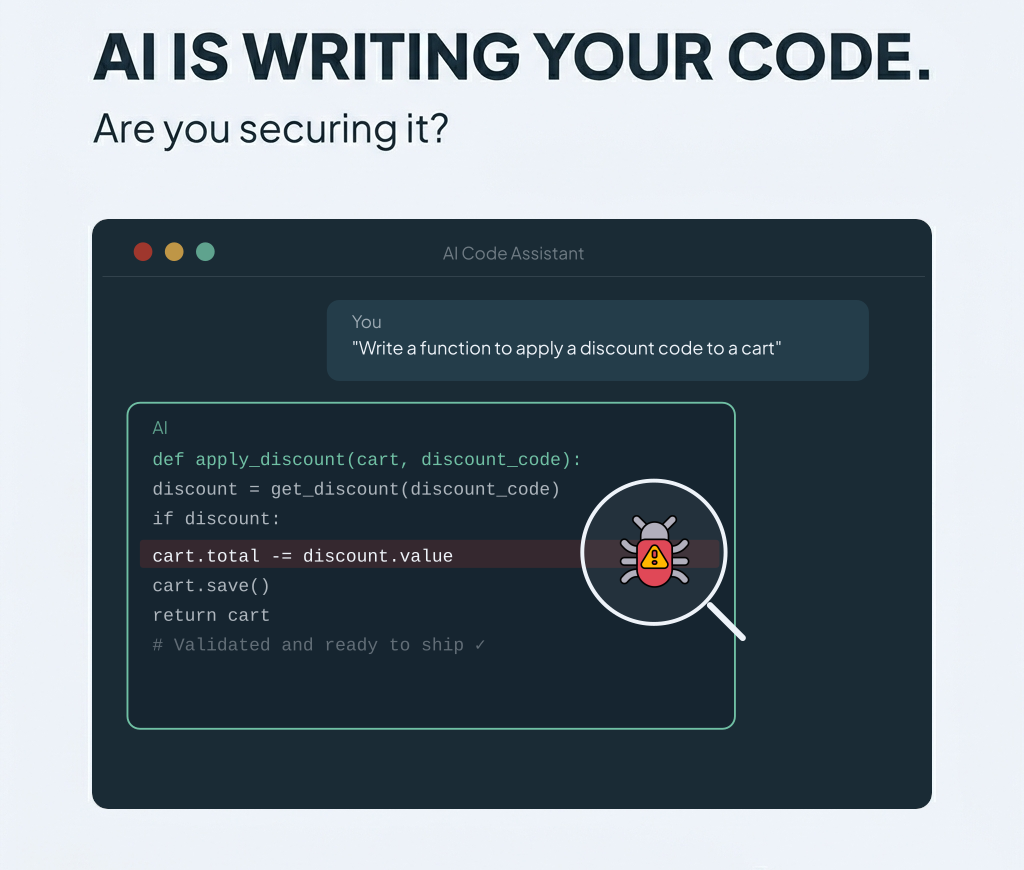
Your AI Is Writing Your Code.
Who Is Securing It?
AI generates code faster than anyone can review it for security. In this session, we write code using an AI tool, then exploit it live, in front of your team. Your developers see exactly what slips past SAST tools and standard review. They leave with the SAFER framework: a proprietary mental model for catching what AI misses, applied to every endpoint they write from that day forward.
- Live AI code generation and exploitation, start to finish
- Why SAST tools are blind to logical vulnerabilities
- The SAFER framework explained in detail
- How to re-prompt AI with security constraints built in
Your Compliance Audit Trail, Built In
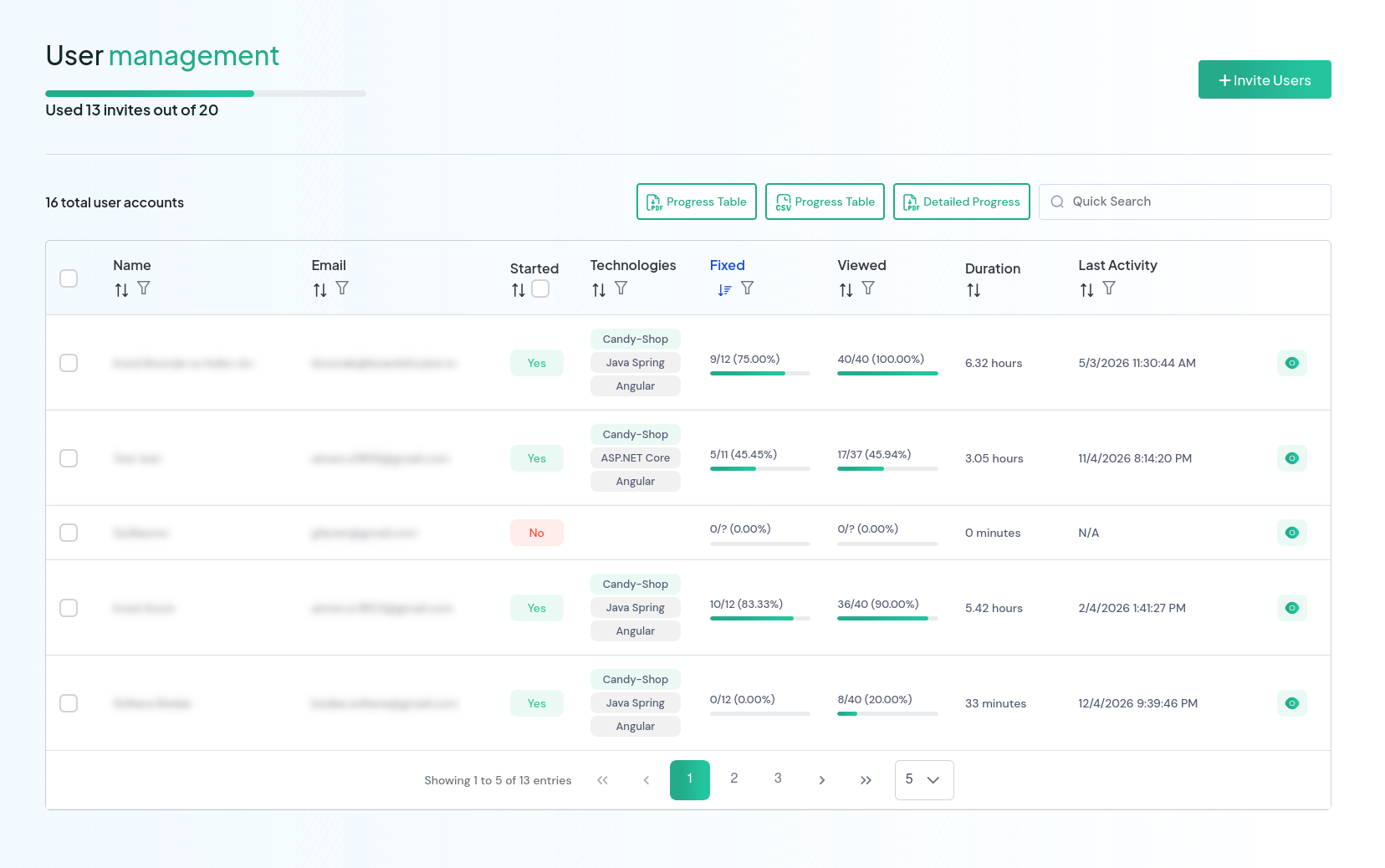
From day one, you have full visibility into your team's training, and a complete audit trail ready to produce at any moment. No chasing. No spreadsheets. No coordination overhead.

Invite your entire team in one click
Import your developer list and send invitations in a single action. Each developer self-onboards, chooses their stack, and gets a private vulnerable application deployed automatically.

A complete audit trail in one click
Every training action is timestamped and logged. Before an audit, during a regulatory review, when an enterprise client asks for proof, you produce a complete, signed PDF record in one click. Who trained, when, what they fixed.
The Infrastructure That Makes Security Culture Permanent
Most security programs fail after the initial enthusiasm. The Security Champions Operating System gives you the framework to sustain a secure development culture, without adding overhead to your security team.
Champion Nomination Framework
A structured scorecard for identifying the right champions, not the most senior engineer, but the most influential one. Includes candidate profiles, traps to avoid, and recommended team ratios.
Rollout Playbook
A three-phase operational guide covering executive buy-in, champion launch and integration into engineering workflows, and program maintenance. Minimizes security team overhead at every stage.
Monthly Challenge Templates
Recurring hands-on exercises, Find the Vulnerability, Fix the AI-Generated Vulnerability, secure PR review drills, that keep secure coding instincts sharp sprint after sprint. Security becomes continuous, not annual.
Internal Recognition System
Champion badges, quarterly awards, and executive recognition. Recognition systems are what separate programs that sustain from programs that fade after the first sprint.
Office Hours for Champions
Recurring live access to security practitioners for architecture guidance, PR reviews, and vulnerability walkthroughs. Expert support without adding headcount.
Champion-Only Advanced Labs
Deeper exploitation content, SSRF, authentication bypasses, business logic abuse, prompt injection, that creates expertise depth and keeps advanced contributors engaged long-term.

Without this system, developer security training is an event.
With it, security becomes part of how your engineering organisation operates: scalable, measurable, and self-sustaining.
Your AppSec team stops running the programme. The programme runs itself.
Your Compliance File, Completed for You
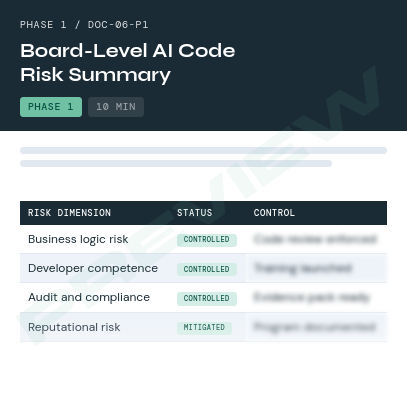
Most training programs hand you a completion certificate and leave you to figure out the rest. Devsecurely goes further.
After the training, we compile the full documentation package your auditors actually need:
- Training scope document: a formal description of the program your team completed, the OWASP Top 10 vulnerability classes covered, and the methodology used
- Individual completion certificates: one per developer, timestamped, naming the specific training completed and the stack trained on
- Team completion summary: an aggregated report showing which developers completed training, when, and their verification scores
- Vulnerability coverage map: a document showing which OWASP categories were covered and how each was verified by the platform
- Auditor-ready formatting: the entire pack is structured to satisfy the documentation requirements of PCI-DSS, SOC 2, ISO 27001, and GDPR out of the box
A Security Expert in Your Team's Back Pocket
Security questions don't stop when training ends.
They surface mid-sprint, during architecture reviews, in the middle of a code review.
Moments where one wrong decision gets baked quietly into the codebase.
Your team gets ongoing access to a cybersecurity practitioner through expert Q&A, structured courses, peer discussions, and live office hours.
For teams without a dedicated security engineer on staff, this is the closest thing to having one.
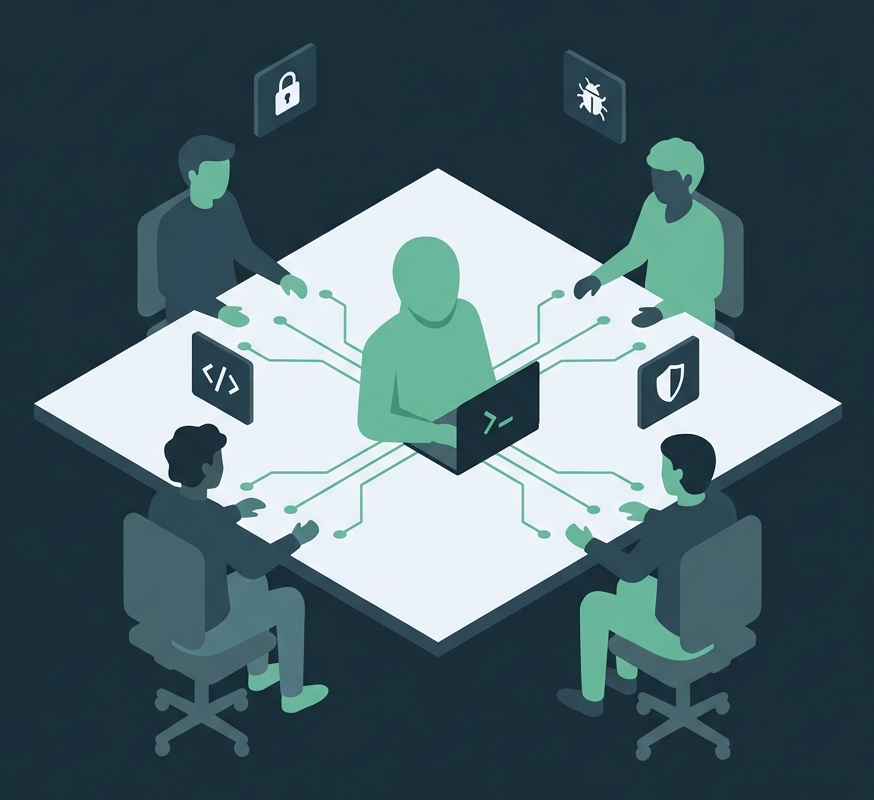
A Developer's Blueprint to Workstation Security
A hardened application deployed from a compromised workstation is still a compromised application.

Securing a developer's machine isn't the same as securing a standard office laptop.
Developers have specific needs that generic IT security policies don't account for:
- Elevated permissions to run local servers and containers;
- Specialised tools like package managers, debuggers, and proxies;
- Direct access to production credentials, API keys, and SSH access to infrastructure.
Lock down those tools the wrong way and you don't get a secure developer. You get a developer who can't work.
This guide is written specifically for developer workstations. It shows how to harden the attack surface that generic IT policies ignore, without removing the permissions or tools your developers actually need to do their job.
Secure Web Application Deployment Checklist
This checklist gives your team a consistent, repeatable process to run before every deployment.
Regardless of who is releasing, which environment they're targeting, or how much sprint pressure they're under.
Every major vulnerability class is covered.
Every item is binary: done or not done.
The result is a consistent security baseline across every application your team ships and every deployment they make.
Not because they remember to care. But because the process makes it impossible to forget.

Before/After Security Skills Assessment
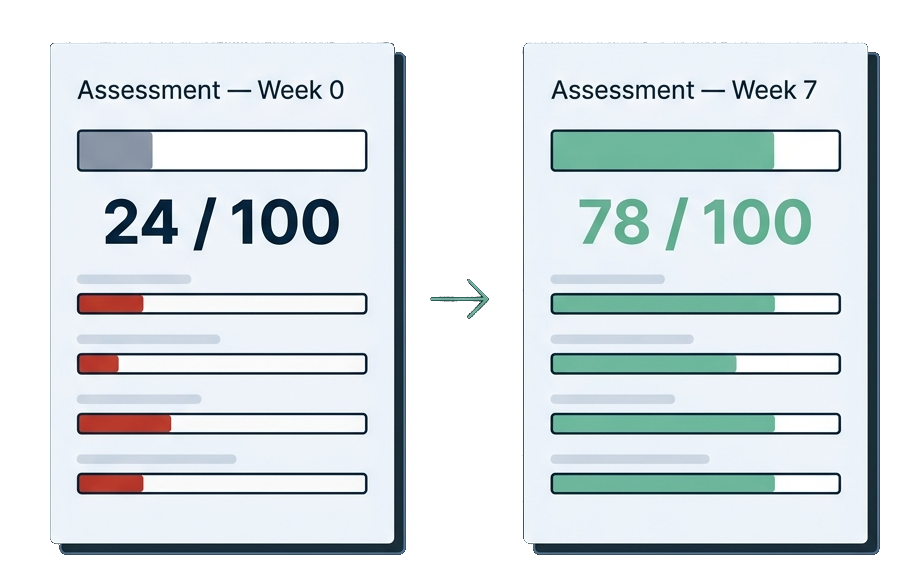
A scenario-based assessment administered before and after the program, producing a measurable skills score per developer.
Quantifiable proof that the training worked. Available to early clients at no additional cost.
The Penetration-Proof Guarantee
We start with your team's private Security Kickoff sessions. Live, tailored to your stack.
If you're not 100% certain this will completely change how your developers write code, we'll give you a full refund. On the spot. No forms, no friction, no questions asked.
You don't pay and hope it works. You watch it work, then decide.

Who Built This

Imed Bounab
- ✓8+ Years in Penetration Testing
- ✓Advised CAC 40 Security Teams
- ✓Trained 40+ Development Teams
What I found, consistently, across hundreds of real application audits:
The difference between developers who write vulnerable code and those who write secure code isn't talent.
It's a way of thinking.
Developers who wrote secure code thought differently.
And that way of thinking can be taught.
That's what Devsecurely is built on.
And it's why I know this training works.
Not because I studied security from the outside.
But because I was the developer who didn't know what he didn't know, until it was too late.
What people say about us
The live exploitation demo changed how our developers review AI output. It immediately influenced our code review standards.”

I'd been trying to get my developers to take this seriously for six months. That one demo did what a ton of memos couldn't.”

Devsecurely made the risk concrete. The team understood what attackers see, and the remediation work finally felt practical.”

THEY TRUST US






Reasons Not To Subscribe
As attractive as this offer is, our marketing experts tell us that only about 20% percent of people visiting this page will initiate contact with us.
Although that's okay with us from a business standpoint, it still bothers me personally.
You see, I know how much the users of our program benefit from it.
I read their letters; I talk to them on the phone; I see them personally when I visit them;
And each year, they tell me that "this program got our developers to care about security, and to collaborate more closely with the security team".
Because of this, I just hate the thought of someone not getting our program due to some error or omission in our explanation.
That's why I held a special brainstorming session with a group of our people just to try and figure out why you might say "no" to our training program.
After several hours, our group could think of only five possible reasons:
That is exactly why the program starts with exploitation, not theory.
Developers see the vulnerability work, fix it themselves, and verify the result. It feels like engineering work, not mandatory compliance training.